The French Riviera has been a painter's coast for well over a century, and the best way to appreciate that legacy isn't to chase it from one door to the next. It's to build a base worth coming home to. Art and museum tours from Saint-Jean-Cap-Ferrat work beautifully for exactly that reason: the peninsula is quiet, green, and wrapped in the same Mediterranean light that drew so many artists to this shoreline in the first place. You spend your mornings looking closely at art, and your afternoons letting it settle.
This guide treats the Riviera's art heritage as an itinerary rather than a checklist. It covers the Belle Époque villas and gardens that shaped the peninsula, the modern art story that unfolded along the coast, how private guided visits come together through a concierge, and how to pace a cultural week so it never feels like homework.
Why Cap Ferrat Makes a Natural Base for an Art-Focused Trip
Art travel can be tiring. Long drives, timed entries, and crowded rooms add up, and a household that returns each evening to a noisy hotel lobby tends to feel it by day three. A private villa changes the equation. The day's looking happens elsewhere; the day's recovering happens at home, on a terrace, with nobody else's schedule to negotiate.
Cap Ferrat suits that rhythm unusually well. The peninsula sits in the middle of the coast, which puts Nice, Monaco, and the hill towns behind them within a manageable drive. Yet once you're back behind the gates, the pace drops immediately. There's no promenade to navigate and no evening scene pulling at you, just gardens, water, and the kind of quiet that makes a morning's worth of paintings easier to digest.
It also carries its own art-historical weight. The peninsula was one of the great stages of Belle Époque society, and its architecture and landscaping still reflect that ambition. In other words, you don't have to leave Cap Ferrat to start the education. You can begin on the coastal path, looking at the way the villas sit in their grounds.
The Belle Époque Villas and Gardens That Shaped the Peninsula
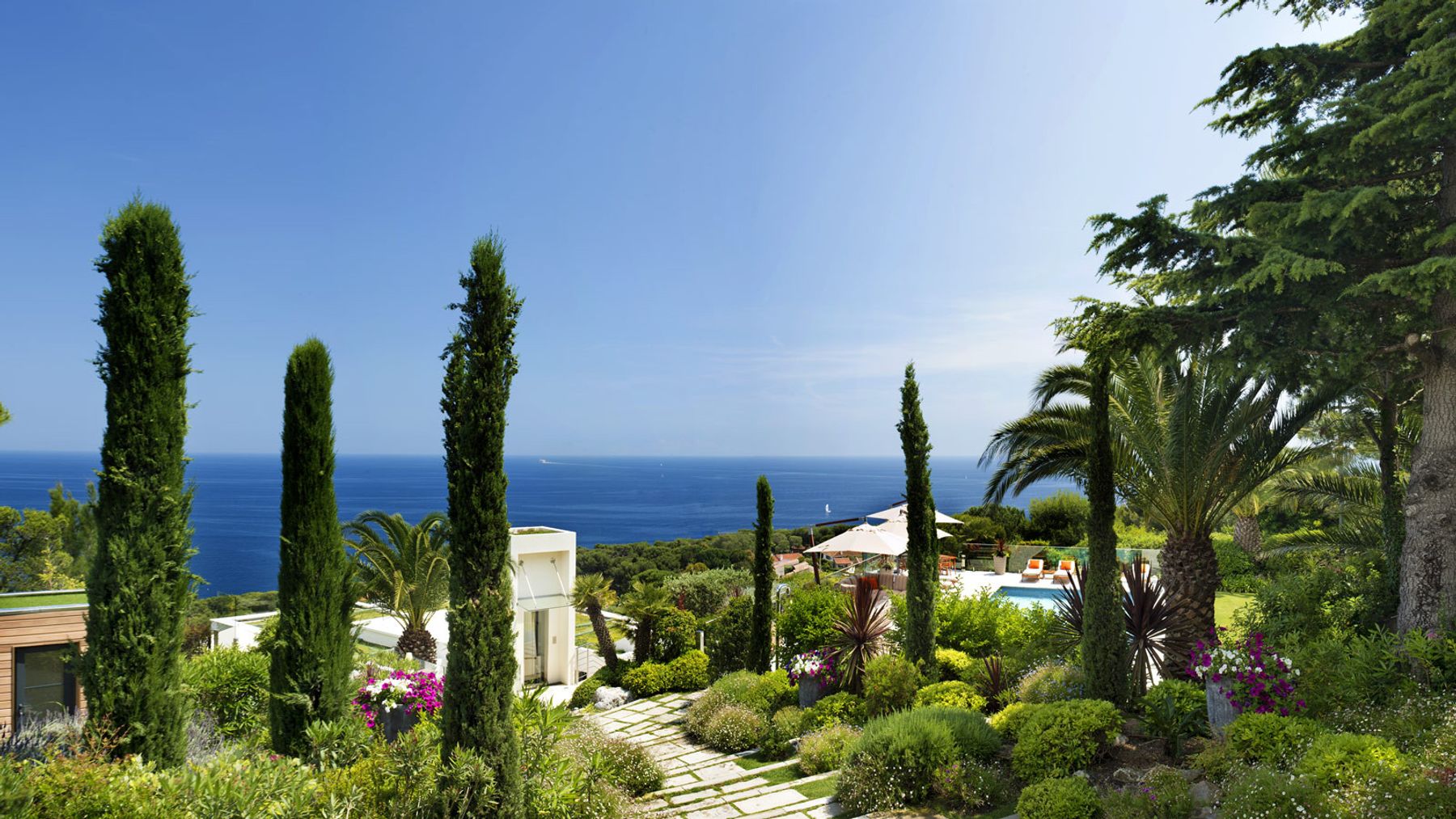
To understand Riviera art, it helps to understand the Riviera's golden age. In the decades before the First World War, the coast became a winter retreat for European aristocrats, industrialists, and patrons. They built extravagantly, and they built with an eye for beauty: pastel facades, columned loggias, terraced gardens stepping down to the sea. Many of these houses were conceived as art in their own right, with interiors, courtyards, and plantings designed as a single composition.
The gardens deserve particular attention. Mediterranean planting is a form of painting with living material, and the Belle Époque estates were laid out with sightlines, color, and seasonal change in mind. Walking the perimeter of the peninsula, you can read these designs from the outside: mature pines framing a view, palms marking an axis, flowering borders spilling over old stone walls. It's a free, open-air preview of what you'll later see on canvas.
Reading the architecture as you walk
A slow morning walk along the coastal path is the best warm-up for any cultural day. Look for the details that define the period: ornate balustrades, tiled roofs in warm terracotta, shuttered windows facing the water, and ironwork that has weathered to a soft green. You'll start to notice how the builders of the era used the light, orienting terraces to catch the sun at its gentlest.
That attention pays off later. When you stand in front of a Riviera landscape painted a century ago, you'll recognize the same pines, the same blues, the same stacked rooftops. The coast hasn't changed as much as you might expect, and that continuity is half the pleasure of an art-led stay.
Staying in a house that belongs to the story
Choosing the right villa matters more on a cultural trip than on most. Light, outlook, and architecture all become part of the experience. A property like Glass Villa Cap Ferrat offers a contemporary counterpoint to the Belle Époque houses around it, with a ten-bedroom layout, gardens threaded with koi ponds, and a private marina. After a day spent among historic interiors, there's something refreshing about returning to a house that looks at the sea so directly. The contrast sharpens your sense of how Riviera architecture has evolved.
The Modern Art Legacy of the Riviera Coast
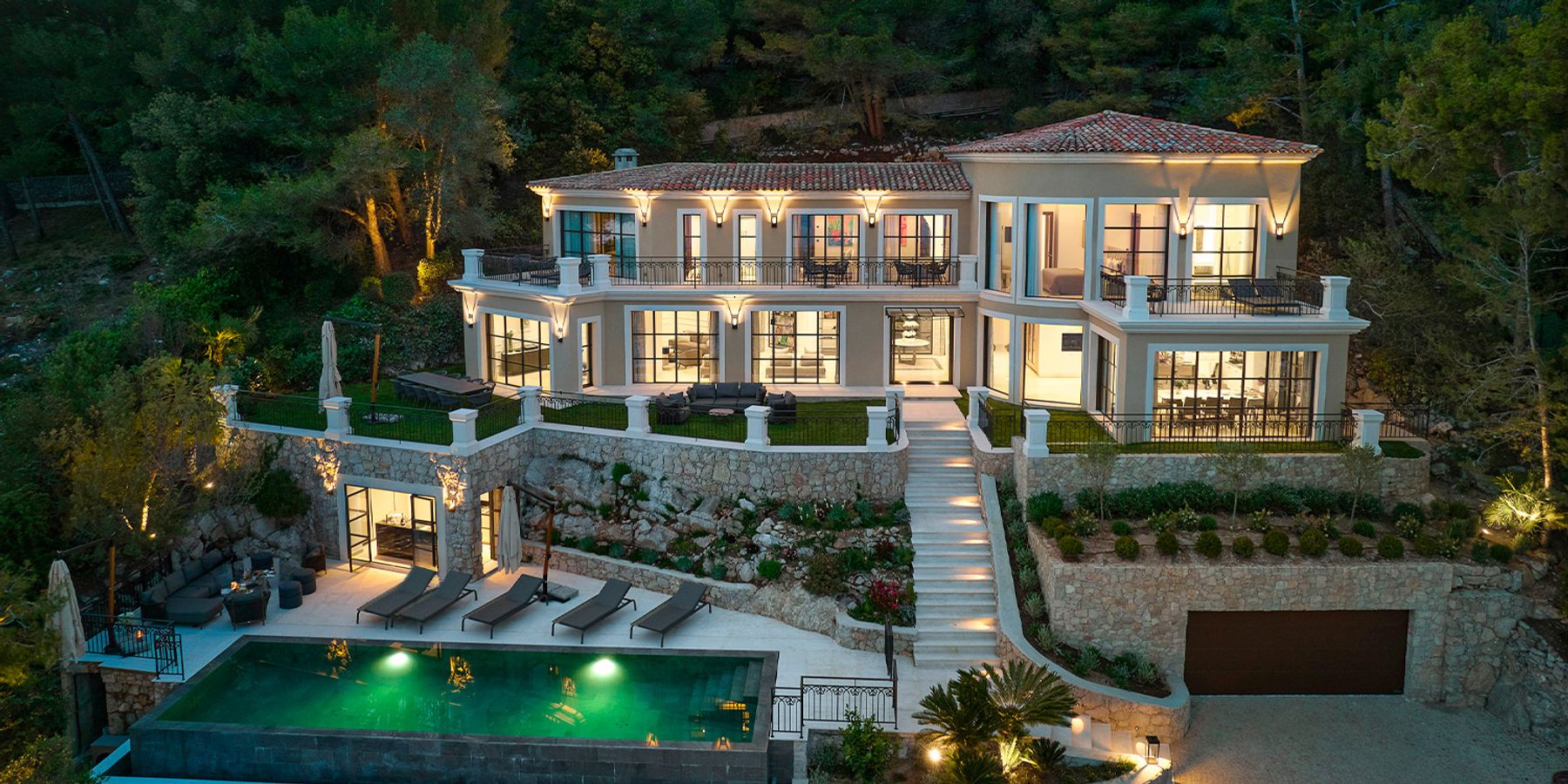
If the Belle Époque gave the coast its stage, the twentieth century filled it with painters. Matisse, Picasso, Chagall, and many of their contemporaries were drawn to the Riviera for the same reasons travelers still are: the clarity of the light, the saturated colors of sea and sky, and a pace of life that left room to work. Some settled for decades. Others passed through and left a body of work behind. Together they turned a stretch of coastline into one of the most important landscapes in modern art.
What makes the story compelling is how personal it feels. These weren't artists working in distant studios and exhibiting elsewhere. They lived here, painted their surroundings, and in several cases shaped the towns where they stayed. The Riviera of their canvases is recognizably the Riviera outside your window: the bold blue of the water, the warm ochre of old walls, the hard shadows of midday.
Why the light matters
Ask anyone who studies this period and they'll bring up the light early. It's a clean, high, slightly silvery quality that flatters color and sharpens form, and it changes across the day in ways that reward patience. A traveler who spends a morning with modern paintings and an afternoon on a terrace will often find the two experiences speaking to each other. You begin to see the canvas in the view.
This is the real argument for pairing art with a villa stay. Seeing the work is one half of the trip; seeing the landscape that produced it is the other. Doing both from a single, calm base turns what might have been a series of visits into a coherent story.
How the legacy shows up beyond the walls
You don't need a ticket to encounter this heritage. It lives in the tiled facades, the painted shutters, the market stalls piled with color, and the small hill towns where studios and workshops still operate. Wandering these places in the quieter parts of the day gives you a feel for the creative culture that never left. Artisan markets and independent workshops across the region carry that tradition forward, and they make rewarding stops between more formal visits.
How Private Guided Visits Work Through a Concierge
The difference between a good cultural day and an exceptional one is usually access and pacing. This is where a villa concierge earns their place. Rather than queueing with everyone else, your household can arrange a private guided visit built around your interests, your timing, and your energy levels.
What a private visit can look like
A private guide, typically an art historian or a specialist in the region's cultural heritage, can walk you through a collection or a historic property with the kind of context a printed label can't offer. You can ask questions, linger where you're curious, and skip what doesn't interest you. For families with teenagers, or groups with mixed levels of enthusiasm, that flexibility is invaluable. The pace adapts to the room rather than the other way around.
Your concierge can also arrange timing that avoids the busiest windows, which makes an enormous difference to the experience. Quiet rooms let you look properly. If a particular piece stops you in your tracks, you can stay with it. Given how much of art appreciation comes down to simple, undistracted looking, this might be the single most valuable service a trip like this can include.
Transport, timing, and the small details
Logistics are where private arrangements really shine. A driver can collect your household from the villa and return you afterward, with no parking searches or navigation stress. Your concierge can coordinate the order of the day so that travel time stays reasonable, and can build in a pause for lunch at a relaxed pace. If you'd rather not sit down in a restaurant, a private chef can prepare something at the villa for your return.
It helps to share your preferences early. Let your concierge know whether your group leans toward classical, modern, or contemporary work, whether you want a scholarly tour or a lighter introduction, and whether anyone has mobility considerations. The more they know, the better the day will fit. A well-briefed concierge team working from a base like Glass Villa Cap Ferrat can turn a vague wish list into a smooth, unhurried itinerary.
Beyond the gallery: studios, gardens, and hands-on experiences
Not every art experience has to happen in front of a framed work. Many travelers enjoy seeing how art is made. Depending on the season and availability, your concierge may be able to arrange time with local artisans, a private sketching or painting session in a garden, or a ceramics or perfumery workshop in one of the region's hill towns. These experiences add texture to a trip and give younger travelers a way into the subject that doesn't depend on quiet contemplation.
How to Pace a Gallery Day with Coastal Time
The most common mistake on a cultural trip is overscheduling. It's tempting to treat the Riviera as a museum corridor and cram in as much as possible. A better approach is to treat every cultural day as a half day, and to protect the rest for the coast itself.
The half-day rule
One substantial visit per day is plenty. Aim to arrive early, when the light is soft and the rooms are calm, and finish by lunchtime. That gives you a morning of focused looking without the fatigue that sets in after three or four hours of standing. Then head home, or to a long, leisurely lunch, and let the afternoon be your own.
The reasoning is simple. Attention is finite, and art rewards fresh eyes. A household that sees one thing well will remember it far longer than one that sees four things badly. By keeping the schedule light, you also leave room for the unplanned: a detour through a village, a long conversation on the way back, a swim before dinner.
Sample rhythm for a five-day cultural stay
Think of the week as alternating currents. Day one is for arriving, unpacking, and walking the coastal path to get your bearings. Day two might be a private guided visit focused on the Belle Époque period and its gardens, followed by a quiet afternoon at the villa. Day three could be a coastal day entirely, with a boat outing or a swim, to reset. Day four turns to the modern masters, perhaps with a guide who can place the artists in context. Day five stays loose, with a market morning and a long final dinner at home.
The pattern matters more than the specifics. Alternate looking days with resting days, keep mornings for the cultural program, and guard the afternoons. If anyone in your group is flagging, it's easy to drop an item without anyone feeling they've missed out.
Letting the coast do its part
Time at the water isn't a break from the art trip; it's part of it. The same sea that appears in so many Riviera paintings is available to you directly, and a swim or a slow boat ride after a gallery morning does something no further visit can. It lets the morning's impressions rearrange themselves. Households staying at a property with its own marina, as Glass Villa Cap Ferrat does, can build these moments into the day with almost no effort.
When to Go: Choosing a Season for an Art-Led Stay
Timing shapes the whole experience. Late spring and early autumn are widely considered the most rewarding seasons for cultural travel on the Riviera. Temperatures are comfortable for walking, gardens are at their best, and visitor numbers are noticeably lower than in high summer. Light in these months is gentle and golden, ideal for both gallery mornings and terrace afternoons.
Summer brings heat and crowds, though it also brings long evenings and the best conditions for swimming. If you travel then, start your cultural days early and retreat to the villa by midday. Winter is quieter still and has its own appeal: clear air, sharp light, and a coast that feels like it belongs to the people who live there. For a household that prefers serious looking over beach time, the cooler months can be a hidden advantage.
Who This Kind of Trip Suits Best
An art-led stay on the peninsula tends to work well for several types of traveler. Couples who enjoy culture at an unhurried pace will find it deeply satisfying. Multigenerational families can use the format to give each generation something of its own, with the more curious members joining guided visits while others enjoy the pool or the gardens. Friends traveling together can split the program, meeting back at the villa to compare notes over dinner.
It's also well suited to first-time visitors who want depth rather than breadth. Instead of trying to see the whole coast, you anchor yourself in one beautiful place and let the region come to you in carefully chosen pieces. For repeat visitors, the same approach offers a fresh way to see a familiar coastline, through the lens of the people who first made it famous.
Is a Villa Better Than a Hotel for a Cultural Trip?
For most households, yes, and the reasons are practical rather than promotional. A villa gives you control over your schedule, which matters when the day's plan depends on guided visits and shifting weather. It offers space for a group to gather and decompress, a kitchen that can deliver a light meal after a long morning, and privacy for the quiet hours when you simply want to read about what you've seen.
A villa also supports the slow, reflective side of art travel that hotels rarely do. You can sit on a terrace with a book on the painters of the coast, with the actual coast spread out in front of you. Few settings connect the subject to the setting so directly. With luxury villas in Saint-Jean-Cap-Ferrat, that kind of integrated experience is the whole point.
Practical Tips Before You Plan
Share your interests with your concierge well before arrival so private visits can be arranged around your dates.
Plan one substantial cultural outing per day, and keep the afternoons free.
Build in at least one full day with no cultural program at all.
Bring comfortable walking shoes for gardens, coastal paths, and old town streets.
Consider a guide who specializes in the period that interests you most, whether Belle Époque architecture or modern painting.
Let younger travelers choose one activity of their own, such as a workshop or a boat outing.
The Riviera as a Slow Education
The finest art tours from Saint-Jean-Cap-Ferrat don't feel like tours at all. They feel like a week spent in the company of a landscape and the people who loved it enough to paint it. The Belle Époque villas teach you how the coast was imagined. The modern masters show you how it was seen. And the peninsula itself, quiet and luminous, gives you somewhere to let it all sink in.
For travelers who want that kind of trip, a private base makes everything easier. A household settled at Glass Villa Cap Ferrat can step out each morning with a plan and return each afternoon to space, light, and water. That, more than any single visit, is what turns a cultural itinerary into a memorable stay. If the Riviera's art heritage has been on your list for years, the peninsula is a graceful place to finally begin.